Posts

Showing posts with the label obesity

Trip to South Korea: Hidden reasons for the leanness of its people

Image
In September last year (2012) I went to South Korea to speak about nonlinear data analysis with WarpPLS ( ), initially for business and engineering faculty and students at Korea University in Seoul, and then as a keynote speaker at the HumanCom 2012 Conference ( ) in Gwangju. Since Seoul is in the north part of the country, and Gwangju in the south, I had the opportunity to see quite a lot of the land and the people in this beautiful country. (Korea University’s main entrance, Anam campus) (In front of Korea University’s main Business School building) Korea University is one of the most prestigious universities in South Korea. In the fields of business and engineering, it is arguably the most prestigious. It also has a solid international reputation, attracting a large number of highly qualified foreign students. I wanted to take this opportunity and try to understand why obesity prevalence is so low in South Korea, which is a common characteristic among Southeast Asian countries, e...

Drs. Francisco Cervantes and Marivic Torregosa, and the 2013 Ancestral Health Symposium

Image
Last year I traveled to South Korea to give presentations on nonlinear structural equation modeling and WarpPLS ( ). These are an advanced statistical analysis technique and related software tool, respectively, which have been used extensively in this blog to analyze health data, notably data related to the China Study. I gave a couple of presentations at Korea University, which is in Seoul, and a keynote address at a conference in Gwangju, in the south part of the country. So I ended up seeing quite a lot of this beautiful country, and meeting many people. Some of my impressions regarding health and lifestyle issues need separate blog posts, which are forthcoming. One issue that kept me thinking, as it did when I visited Japan a few years ago as well, was the obvious leanness of the South Koreans, compared with Americans, even though you don’t see a lot of emphasis on dieting there. Interestingly, this phenomenon also poses a challenge to many dietary schools of thought. For examp...

The 2013 PLoS ONE sugar and diabetes study: Sugar from fruits is harmless

Image
A new study linking sugar consumption with diabetes prevalence has gained significant media attention recently. The study was published in February 2013 in the journal PLoS ONE ( ). The authors are Sanjay Basu, Paula Yoffe, Nancy Hills and Robert H. Lustig. Among the claims made by the media is that “… sugar consumption — independent of obesity — is a major factor behind the recent global pandemic of type 2 diabetes” ( ). As it turns out, the effects revealed by the study seem to be very small, which may actually be a side effect of data aggregation; I will discuss this further below. Fruits are exonerated Let me start by saying that this study also included in the analysis the main natural source of sugar, fruit, as a competing variable (competing with the effects of sugar itself), and found it to be unrelated to diabetes. As the authors note: “None of the other food categories — including fiber-containing foods (pulses, nuts, vegetables, roots, tubers), fruits, meats, cereals, and ...

The man who ate 25 eggs per day: What does this case really tell us?

Image
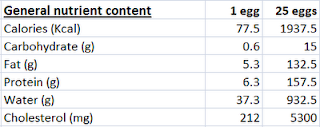
Many readers of this blog have probably heard about the case of the man who ate approximately 25 eggs (20 to 30) per day for over 15 years (probably well over), was almost 90 years old (88) when the case was published in the prestigious The New England Journal of Medicine , and was in surprisingly good health ( ). The case was authored by the late Dr. Fred Kern, Jr., a widely published lipid researcher after whom the Kern Lipid Conference is named ( ). One of Kern’s research interests was bile, a bitter-tasting fluid produced by the liver (and stored in the gallbladder) that helps with the digestion of lipids in the small intestine. He frames the man’s case in terms of a compensatory adaptation tied to bile secretion, arguing that this man was rather unique in his ability to deal with a lethal daily dose of dietary cholesterol. Kern seemed to believe that dietary cholesterol was harmful, but that this man was somehow “immune” to it. This is ironic, because often this case is presented...

The steep obesity increase in the USA in the 1980s: In a sense, it reflects a major success story

Image
Obesity rates have increased in the USA over the years, but the steep increase starting around the 1980s is unusual. Wang and Beydoun do a good job at discussing this puzzling phenomenon ( ), and a blog post by Discover Magazine provides a graph (see below) that clear illustrates it ( ). What is the reason for this? You may be tempted to point at increases in calorie intake and/or changes in macronutrient composition, but neither can explain this sharp increase in obesity in the 1980s. The differences in calorie intake and macronutrient composition are simply not large enough to fully account for such a steep increase. And the data is actually full of oddities. For example, an article by Austin and colleagues (which ironically blames calorie consumption for the obesity epidemic) suggests that obese men in a NHANES (2005–2006) sample consumed only 2.2 percent more calories per day on average than normal weight men in a NHANES I (1971–1975) sample ( ). So, what could be the main reason ...

Good insulin, bad insulin: Its role in obesity?

Gary Taubes makes insulin out to be a bad guy. In his latest article in Newsweek Magazine commenting on HBO's  Weight of the Nation documentary, he once again challenges energy balance (energy intake versus energy expended) as a paradigm for understanding obesity. The author of  Good Calories, Bad Calories  offers an alternative theory: refined sugars and grains trigger insulin, which leads to fat accumulation. He also doesn't think much of physical activity as playing a "meaningful role in keeping off the pounds." Is Taubes right? Not according to Jim Hill, Ph.D., a professor of pediatrics and medicine at the University of Colorado School of Medicine, Denver. Hill is the cofounder of the National Weight Control Registry, a registry of individuals who've succeeded in maintaining weight loss over time. He is also the co-founder of America on the Move, a national weight-gain prevention initiative. At a session at Experimental Biology, Hill said that the the ...

BMI puts young Asian-American women at risk of being "skinny fat"

As if we needed any more reason to pick on Body Mass Index (BMI): new research finds that this most accepted approach for assessing overweight and obesity based on height and weight could lead to misclassification of young Asian-American women as healthy when they're really "skinny fat," which could put them at greater risk for type 2 diabetes and cardiovascular disease. In my last post , I discussed the scary, growing problem of sarcopenic obesity  (aka "skinny fat") in older adults, described as age-related muscle loss in combination with the accumulation of body fat. One common result of sarcopenic obesity is a misclassification using BMI as "normal-weight" in these aged individuals. Misclassification in older adults with sarcopenic obesity is just one reason why BMI is loathed by those interested in public health. Sadly, I learned at Experimental Biology, misclassification also occurs frequently across all ages depending on ethnicity. Asian America...

How to fight "job-esity"

Workplace programs are an effective and worthwhile way for employers to help improve the health of their employees and reduce medical costs, scientists said Tuesday at Experimental Biology 2012 in San Diego at a session organized by the American Society for Nutrition.  The medical expenses for employees who are obese are estimated at about 42 percent higher than for those with a healthy weight, according to the Centers for Disease Control and Prevention. Yet for the approximately 60 percent of Americans who are employed, it may be the workplace itself that is at the root of weight gain in the first place. Shirley Beresford, Ph.D., professor of epidemiology of University of Washington, expressed optimism that workplace obesity programs could help reduce obesity based on a history of research. She explained that programs offered a way for employers to partner in intervention; however, she noted that the enthusiasm of employees for behavioral change may fall short. The trouble wi...

Beyond calories in, calories out -- look to the Amish

What is wrong with "eat less, move more"? Most of us are familiar with this mantra as weight-loss advice. However, a new consensus statement from the American Society for Nutrition ( ASN ) and the International Life Sciences Institute ( ILSI ) contends that this energy-in-energy-out framework isn't really so simple. The problem lies in that consuming fewer calories and burning more through physical activity doesn’t always translate well to weight management. That is not to say that the framework of energy balance—negative energy balance for weight loss; positive energy balance for weight—is wrong. At some level, it’s right; however, several factors come into the equation. During a Saturday morning session of Experimental Biology ( #EB2012 ) in San Diego, Calif., researchers discussed the topic of this complexity and promoting a new paradigm on energy balance. Energy balance is not just about addition of diet and exercise; each affects the other, so that changing one chang...

The “pork paradox”? National pork consumption and obesity

Image
In my previous post ( ) I discussed some country data linking pork consumption and health, analyzed with WarpPLS ( ). One of the datasets used, the most complete, contained data from Nationmaster.com ( ) for the following countries: Australia, Brazil, Canada, China, Denmark, France, Germany, Hong Kong, Hungary, Japan, Mexico, Poland, Russia, Singapore, Spain, Sweden, United Kingdom, and United States. That previous post also addressed a study by Bridges ( ), based on country-level data, suggesting that pork consumption may cause liver disease. In this post we continue that analysis, but with a much more complex model containing the following country variables: wealth (PPP-adjusted GNP/person), pork consumption (lbs/person/year), alcohol consumption (liters/person/year), obesity (% of population), and life expectancy (years). The model and results, generated by WarpPLS, are shown on the figure below. (See notes at the end of this post.) These results are only for direct effects. War...

Does pork consumption cause cirrhosis? Perhaps, if people become obese from eating pork

Image
The idea that pork consumption may cause cirrhosis has been around for a while. A fairly widely cited 1985 study by Nanji and French ( ) provides one of the strongest indictments of pork: “In countries with low alcohol consumption, no correlation was obtained between alcohol consumption and cirrhosis. However, a significant correlation was obtained between cirrhosis and pork.” Recently Paul Jaminet wrote a blog post on the possible link between pork consumption and cirrhosis ( ). Paul should be commended for bringing this topic to the fore, as the implications are far-reaching and very serious. One of the key studies mentioned in Paul’s post is a 2009 article by Bridges ( ), from which the graphs below were taken. The graphs above show a correlation between cirrhosis and alcohol consumption of 0.71, and a correlation between cirrhosis and pork consumption of 0.83. That is, the correlation between cirrhosis and pork consumption is the stronger of the two! Combining this with the Nanji a...

Kleiber's law and its possible implications for obesity

Image
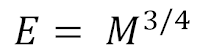
Kleiber's law ( ) is one of those “laws” of nature that is both derived from, and seems to fit quite well with, empirical data. It applies to most animals, including humans. The law is roughly summarized through the equation below, where E = energy expenditure at rest per day, and M = body weight in kilograms. Because of various assumptions made in the original formulation of the law, the values of E do not translate very well to calories as measured today. What is important is the exponent, and what it means in terms of relative increases in weight. Since the exponent in the equation is 3/4, which is lower than 1, the law essentially states that as body weight increases animals become more efficient from an energy expenditure perspective . For example, the energy expenditure at rest of an elephant, per unit of body weight, is significantly lower than that of a mouse. The difference in weight does not have to be as large as that between an elephant and a mouse for a clear differ...