Posts

Showing posts with the label aging

Nevermind body fat; put focus on muscle with age

With all the attention given to body fat, a result of the high prevalence of obesity and type 2 diabetes, skeletal muscle is often given the back seat. Yet holding on to lean muscle mass alone, in itself, may be the most important factor in avoiding health problems above. What's often forgotten is that skeletal muscle is a metabolically active tissue that plays a critical role in consuming energy and determining metabolic rate, it's the large site for fat burning, and it's a primary site for blood glucose disposal. It's time to give muscle its due. When you reach age 60 or older, it gets harder to keep, let alone build, muscle. The reasons are a combination of lack of energy, exercise, dietary protein, and hormones. One more is a blunted protein synthesis response that is described as anabolic resistance in aging. Left to run their course, these factors eventually bring on a decrease of muscle mass over time, or sarcopenia. The loss is also often accom...

Depression and telomeres

Image
Reference: Wolkowitz et al. 2011 March. People who suffer from major depression have a higher risk of age-related illness and earlier mortality (1 &2). Researchers from University of California, San Francisco (UCSF), investigated (1) telomere length in depressed individuals versus matched controls and assessed other biological factors associated with telomere shortening. Led by Nobel laureate Elizabeth Blackburn, Ph.D., the team of researchers published their findings in the March issue of PLos One . Their hypothesis was that not all depressed subjects would show shortened telomeres equally because of a large variance in depressive episodes over a lifetime. However, they predicted that those who suffered from depression for long durations would have shorter telomeres due to longer exposure to oxidative stress and inflammation induced by psychological stress. The scientists recruited 18 subjects diagnosed with Major Depressive Disorder (MDD), excluding those with psychosis or bipol...

Safe weight loss for seniors through diet and exercise

Image
In the United States, the number of obese older adults has reached disturbing heights—now affecting approximately 20 percent of those ages 65 and older—and is only expected to rise as more Baby Boomers become senior citizens. Weight loss through calories reduction or exercise are generally good for most people as an intervention in obesity, although the appropriateness of these methods has historically been a matter of controversy in older, obese adults. A major concern with weight loss is the accompanying loss of lean tissue, which can accelerate existing sarcopenia (age-related loss of muscle and strength), and result in reduction of bone mineral density that could worsen frailty. This could lead to greater risk of bone fractures and broken hips. Studies have yet to provide sufficient evidence, one way or another, as to whether or not weight loss provides a true enhancement to quality of life. In a one-year, randomized, controlled trial, researchers from Washington University School ...

Is there a link between telomeres and dietary fiber?

New evidence published in Archives of Internal Medicine has it that eating more dietary fiber, particularly from whole grains, could lead to a longer life. The large study found a high-fiber diet reduced risk of heart disease and cancer, as well as infectious and respiratory illnesses. This is great news for those eating diets high in fiber. What’s also interesting is that another reason why dietary fiber is protective to health is because of its influence on telomeres. Telomeres are the protective caps at the end of chromosomes, and their length is considered the closest way to measure lifespan in humans. As reported in a prospective cohort study published in the March 2010 issue of American Journal of Clinical Nutrition (AJCN), telomere length is positively associated with higher fiber intake in women. Dietary fiber from whole grains appears to provide the strongest benefit. In addition, in the AJCN study, the researchers found telomere length was negatively associated with inc...

Living longer with an ideal BMI

Maintaining a healthy body mass index, or BMI, is one of the most important ways to help you live longer, according to a new study published in the December issue of New England Journal of Medicine . BMI is not a perfect measure, but it is one of the simplest for estimating body weight. It is calculated by weight in pounds divided by height in inches squared and multiplying the number by 703, or by weight in kilograms divided by height in inches squared. What’s your BMI? Find out using this free calculator provided by the National Heart Lung and Blood Institute, of the National Institutes of Health. The study’s findings support an optimal BMI in the “normal weight” range of 20 to 24.9, which is generally associated with the lowest risk of death from all causes including chronic diseases such as cardiovascular disease and cancer. The association was strongest among participants who were younger than 50 years old. A BMI of 25 or more was associated with the highest mortality risks. The ...

Aubrey de Grey Response to Rose and Coles

Image
Aubrey de Grey Next up at H+ @Caltech this afternoon was the famous and fast-talking Aubrey de Grey, who provided a response to previous talks by Michael Rose and Stephen Coles. This is my take as how I understood the arguments. It was, admittedly, a bit hard to follow. What we heard from Rose and Coles, explained de Grey, was that we have an exponential rise in deaths and then, we have what de Grey called, a "weird leveling off." So, he said that as we get older, the data point to the fact that we eventually do reach a plateau in old age when mortality rates decline (passing the "aging phase" into a "biological immortality phase"), an argument of which Coles vehemently disagrees with. He also said that it would probably not be a plateau like the type that Rose discussed in his talk , and as he showed in fruitflies. Basically the data are sparse in these older populations, so there's no way we can really know what to expect. "We definitely need mo...

Building Methuselahs

Image
Michael Rose, evolutionary biologist Michael Rose is an evolutionary biologist, of University of California at Irvine, who knows how to sum up the complexity of aging. He told us at H+ @ Caltech that aging is just a normal process of natural selection. It's obviously a "big picture" view versus a cellular or molecular view. But to prove his point, he decided to trick natural selection and produce fruitflies that live five times longer than the average. The trick? Take the fruitflies that can reproduce in old age, which still have most of their physiological function, and repeat. Pretty simple. Eventually, you get longer-living fruitflies selected for late-life reproduction. And he shared data on how this all worked. From the fruitfly data, Rose then explained, we can learn a bit about why humans age in the way they do, with pressures of reproduction playing in as a major factor. Also, we can make use of data on the flies and other animals that suggests that species enter ...

Is there a maximum human lifespan?

Image
Stephen Coles "Death is an imposition on the human race and can no longer be tolerated" - Alan Harrington With Harrington's quote,  Stephen Coles  opened his talk on whether or not there is a maximum limit to human lifespan at H+ @ Caltech in Los Angeles. As a biogerontologist, Coles studies old people, as well as old yeast, microscopic worms, flies and primates. Each of these species have lifespan limits, and, indeed, he answers, there is a maximum number of years that humans live. However, he adds, the more we understand aging, and the diseases that kill us, it is possible to extend life's max limit. "All bets are off if we can do something about it," Coles said. Although, he explains that the entire process of aging is so complex that it is sort of like the blind men touching the elephant because, if your blind, it has a different shape depending on where you're touching. Putting together the pieces that make up aging is the AMMG , which has met se...

What can beetles tell us about slowing aging? Answers are in the mitochondria

Image
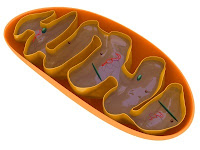
Mitochondrial genes influence life expectancy in beetles, a new study reports. Genetic research into aging and longevity revolves mainly around the nuclear genome, which encodes most of our multicellular bodies, but a new Monash University study performed on beetles suggests shifting focus to the mitochondrial genome.   The mitochondria—kidney-shaped organelles often referred to as the cell's powerhouses—each contain their own set of DNA, passed on from mother to offspring, and according to the study, it's these strands that may hold key genes that determine one's life expectancy, at least in bugs.   The study, published in the August issue of The American Naturalist , found evidence that particular combinations of genes (haplotypes) in the mitochondrial genome influenced lifespan in a species of seed beetles ( Callosobruchus maculates ).   As a result, the research supports growing evidence that particular mitochondrial gene combinations could also play a major role i...