Posts

Showing posts with the label fasting

No fat gain while eating well during the Holiday Season: Palatability isolines, the 14-percent advantage, and nature’s special spice

Image
Like most animals, our Paleolithic ancestors had to regularly undergo short periods of low calorie intake. If they were successful at procuring food, those ancestors alternated between periods of mild famine and feast. As a result, nature allowed them to survive and leave offspring. The periods of feast likely involved higher-than-average consumption of animal foods, with the opposite probably being true in periods of mild famine. Almost anyone who adopted a low carbohydrate diet for a while will tell you that they find foods previously perceived as bland, such as carrots or walnuts, to taste very sweet – meaning, to taste very good. This is a special case of a more general phenomenon. If a nutrient is important for your body, and your body is deficient in it, those foods that contain the nutrient will taste very good. This rule of thumb applies primarily to foods that contributed to selection pressures in our evolutionary past. Mostly these were foods available in our Paleolithic ev...

Daniel Suelo, the man who quit money, seems remarkably healthy

Image
Daniel James Shellabarger (better known as Daniel Suelo) is portrayed in the bestselling 2012 nonfiction book by Mark Sundeen titled “The Man Who Quit Money” ( ). Apparently Suelo stopped using money in 2000, and lives in a cave near the city of Moab in Utah. His diet comprises primarily wild vegetables and fruits, insects, and road kill; as well as discarded or donated food he gets from others when he visits the city. The photo below is from a recent BBC documentary. An interesting 2006 YouTube clip on Suelo is titled “Moneyless in Moab” ( ). Suelo is listed as having been born in 1961 ( ), and the photo above appears to have been taken in 2012. If these dates are correct, he is 51 in the photo above. I cannot help but think that he looks remarkably healthy. The 40-50 age period is one that often sets the stage for many diseases of civilization in urban societies. Suelo’s decision seems like a radical one, at least to me. There are always complex motivations behind radical decisions. ...

The 14-percent advantage of eating little and then a lot: Putting it in practice

Image
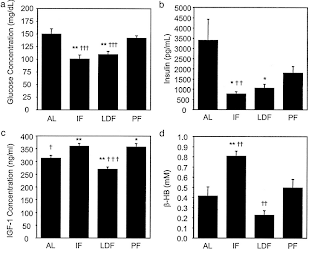
In my previous post I argued that the human body may react to “eating big” as it would to overfeeding, increasing energy expenditure by a certain amount. That increase seems to lead to a reduction in the caloric value of the meals during overfeeding; a reduction that seems to gravitate around 14 percent of the overfed amount. And what is the overfed amount? Let us assume that your daily calorie intake to maintain your current body weight is 2,000 calories. However, one day you consume 1,000 calories, and the next 3,000 – adding up to 4,000 calories in 2 days. This amounts to 2,000 calories per day on average, the weight maintenance amount; but the extra 1,000 on the second day is perceived by your body as overfeeding. So 140 calories are “lost” . The mechanisms by which this could happen are not entirely clear. Some studies contain clues; one example is the 2002 study conducted with mice by Anson and colleagues ( ), from which the graphs below were taken. In the graphs above AL refers ...

The 14-percent advantage of eating little and then a lot: Is it real?

Image
When you look at the literature on overfeeding, you see a number over and over again – 14 percent. That is approximately the increase in energy expenditure you get when you overfeed people; that is, when you feed people more calories that they need to maintain their current weight. This phenomenon is related to another interesting one: the nonlinear increase in body weight and fat mass following overfeeding after a period starvation, illustrated by the top graph below from an article by Kevin Hall ( ). The data for the squares on the top graph is from the Minnesota Starvation Experiment ( ). The graph at the bottom is based mostly on the results of a simulation, and doesn’t clearly reflect the phenomenon. Due to the significant amount of weight lost in what is called above the semistarvation stage (SS), the controlled refeeding period (CR) actually involved significant overfeeding. Nevertheless, weight was not gained right away, due to a sharp increase in energy expenditure. That is...

Gaining muscle and losing fat at the same time: A more customized approach based on strength training and calorie intake variation

Image
In the two last posts I discussed the idea of gaining muscle and losing fat at the same time ( ) ( ). This post outlines one approach to make that happen, based on my own experience and that of several HCE ( ) users. This approach may well be the most natural from an evolutionary perspective. But first let us address one important question: Why would anyone want to reach a certain body weight and keep it constant, resorting to the more difficult and slow strategy of “turning fat into muscle”, so to speak? One could simply keep on losing fat, without losing or gaining muscle, until he or she reaches a very low body fat percentage (e.g., a single-digit body fat percentage, for men). Then he or she could go up from there, slowly putting on muscle. The reason why it is advisable to reach a certain body weight and keep it constant is that, below a certain weight, one is likely to run into nutrient deficiencies . Non-exercise energy expenditure is proportional to body weight. As you keep on...

Intermittent fasting for cardiovascular health

At a time when our ancestors existed as hunter-gatherers in the Paleolithic, it's clear that food was not always available and that the fluctuation of feast and famine was probably more apparent. The theory of thrifty genes has it that our metabolic function is dependent on these fluctuations for optimal insulin function. So, it's hypothesized that since intermittent fasting may have been instrumental in the selection of our genes, its practice may have lasting benefits on insulin sensitivity. Findings to date in humans are that fasting does improve insulin sensitivity by inducing increases in circulating adiponectin along with changes in plasma leptin. By these mechanisms, intermittent fasting acts on increasing insulin's action differently than physical activity. Now, new research is showing that fasting one day each month may lower the risk of cardiovascular disease, according to research cardiologists from Salt Lake City. They observed 200 subjects, most being members o...

Fasting for 24 hours and ending up with a bigger waist!? This may be a sign that you are losing abdominal fat

Image
This is such a common phenomenon that you’d expect to see it discussed more often – people fasting for a non-negligible number of hours and ending up with a bigger waist. However, it is very difficult to find anything published on it. (Lyle McDonald discussed a related phenomenon on this post on whooshes and squishy fat .) I am not talking about only a perceived bigger waist; I am talking about measurably bigger. This frequently happens with folks who were obese, lost a lot of body fat, and are trying to get rid of the stubborn lower abdominal fat. (Source [ironically]: Gograins.com.au) Fasting and ending up with a bigger waist; how is that possible? Contrary to popular belief, this is very unlikely to be due to the body turning muscle protein into glucose, and then converting that glucose into fat for storage in fat cells around the waist. When you are fasting, one factor strongly opposes that transformation. The body is in net body fat release mode, due in part to low circulating ins...

The amounts of water, carbohydrates, fat, and protein lost during a 30-day fast

Image
When it comes to losing fat and maintaining muscle, at the same time, there are no shortcuts. The process generally has to be slow to be healthy. When one loses a lot of weight in a few days, most of what is being lost is water, followed by carbohydrates. (Carbohydrates are stored as liver and muscle glycogen.) Smaller amounts of fat and protein are also lost. The figure below, from Wilmore et al. (2007), shows the weights in grams of stored water, carbohydrates (glycogen), fat, and protein lost during a 30-day water fast. On the first few days of the fast a massive amount of water is lost, even though drinking water is allowed in this type of fast. A significant amount of glycogen is lost as well. This is no surprise. About 2.6 g of water are lost for each 1 g of glycogen lost. That is, water is stored by the body proportionally to the amount of glycogen stored. People who do strength training on a regular basis tend to store more glycogen, particular in muscle tissue; this is a compe...

Body fat and disease: How much body fat can I lose in one day?

Image
Body fat is not an inert deposit of energy. It can be seen as a distributed endocrine organ. Body fat cells, or adipocytes, secrete a number of different hormones into the bloodstream. Major hormones secreted by adipose tissue are adiponectin and leptin. Estrogen is also secreted by body fat, which is one of the reasons why obesity is associated with infertility. (Yes, abnormally high levels of estrogen can reduce fertility in both men and women.) Moreover, body fat secretes tumor necrosis factor-alpha, a hormone that is associated with generalized inflammation and a number of diseases, including cancer, when in excess. The reduction in circulating tumor necrosis factor-alpha and other pro-inflammatory hormones as one loses weight is one reason why non-obese people usually experience fewer illness symptoms than those who are obese in any given year, other things being equal. For example, the non-obese will have fewer illness episodes that require full rest during the flu season. In tho...

Muscle loss during short-term fasting

This is an issue that often comes up in online health discussions, and was the topic of a conversation I had the other day with a friend about some of the benefits of intermittent fasting . Can the benefits of intermittent fasting be achieved without muscle loss? The answer is “yes”, to the best of my knowledge. Even if you are not interested in bulking up or becoming a bodybuilder, you probably want to keep the muscle tissue you have. As a norm, muscle takes a long time, and effort, to build. It is generally easier to lose muscle than it is to gain it. Fat, on the other hand, can be gained very easily. Body fat percentage is positively correlated with measures of inflammation markers and the occurrence of various health problems. Since muscle tissue makes up lean body mass, which excludes fat, it is by definition negatively correlated with inflammation markers and health problems. As muscle mass increases, so does health; as long as the increase in muscle mass is “natural” – i.e., not...

Intermittent fasting and reduced inflammation

A recent post  on the Primal Wisdom blog led me to do go back to some of the research on an approach to dieting that I tried myself, with some positive results. The approach is known as intermittent fasting (IF). I also found an excellent blog post by Dr. Michael Eades on IF (see  here ). Typically IF involves fasting every other day. On the non-fasting days, food and water consumption is not restricted in any way. On fasting days, only water is consumed. Variations of this approach usually involve replacing water with juice, and having an eating window of only a few hours within longer periods – e.g., fasting 19 hours and then eating during a window of 5 hours, for each period of 24 hours. IF is different from calorie restriction (CR), in that in the latter total daily calorie intake is restricted to a somewhat fixed amount, below one’s basal metabolic rate (the number of calories needed to maintain one’s current weight). In CR the calorie restriction is not normally ach...